|
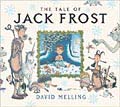
The
Tale of Jack Frost
by David Melling
Barron's 2003
A little boy comes to live in an enchanted
forest filled with magical creatures. This mysterious boy
has a special talent— whatever he touches turns to
ice. Nearby, nasty goblins are trying to take over the enchanted
forest for themselves. Can Jack foil their plans?
The Story
David Melling's text is minimal, appropriate for such a
visual story, and the voice is accessible and friendly.
Despite the preface, the relationship among the forest,
the goblins and magic is not clear. I would have liked to
learn more of the forest's magic, how it manifests itself
(Jack seems to be the only creature who exhibits magical
abilities), and the goblins' motivation for wanting that
magic. There is mention of the forest being "opened"
now, but it doesn't get fleshed out. If this is a danger
to the forest creatures, wouldn't they want to try and close
the forest?
The Illustrations
The visual world Melling has created is fascinating. All
of the forest creatures are original designs, from the snow
beetles with human hands and feet to the bald, stripped
fairy creatures that sport little tails. There's a cynical
unicorn, a hedgehog/aardvark creature and a tall, bovine
thing with interestingly coiffed fur. Even the trees have
personalities. The backgrounds are every bit as interesting
as the foregrounds.
There are a few visual inconsistencies
(the illustrations contradict the text which states that
Jack's skin is "white as snow"; the time of year
is not clear— snow, ivy, sunflowers, falling leaves
and bare trees all exist at the same time), but everything
is drawn with such confidence and skill. Melling's style
is refreshing with the perfect mix of realistic details
drawn with an animated flair. The thin ink line and simple
watercolor give just enough detail without being fussy or
precious.
The forest's color palette is ice blues,
creams, golds, and grays. The goblins are bolder with yellow
greens, reds and blues. The book design is robust; there
is a good mixture of double spreads, bleeds, spots, vignettes,
and single illustrations that move the story along. Even
the end papers are a special treat; they are covered with
pre-production sketches of all the characters, showing Melling's
design process.
Melling did such an admirable job creating
a believable visual world— all in all, this book was
an enjoyable experience. I am looking forward to his next
book. - L.F.
|